
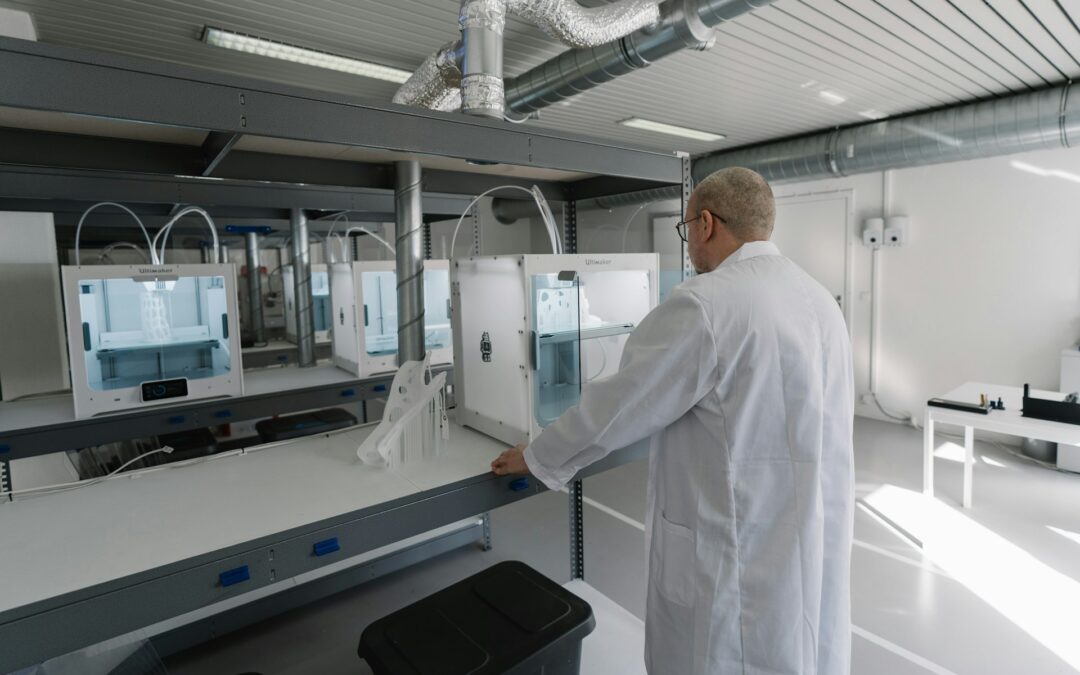
Precise 3D printing for medical professionals in New York City isn’t a luxury—it’s a necessity. From anatomical models to custom surgical tools, NYC 3D printing services are helping hospitals, clinics, and researchers move faster and care smarter.
Voxel Magic provides medical-grade 3D printing in NYC. We support everything from surgical planning to device prototyping. You get detailed results, HIPAA-safe workflows, and rapid local turnaround to keep your team on schedule and your patients in focus.
This guide will walk you through how medical professionals use 3D printing across NYC—from point-of-care hospital labs to regulatory essentials and local service options.
Understanding 3D Printing in Medicine
3D printing in healthcare combines digital design with precise layering techniques to create physical models and devices. This technology has grown rapidly in New York City’s medical community, reshaping how professionals approach surgery, implants, and patient care.
You’ll find that 3D printing offers real advantages, like faster results, better customization, and clearer communication.
What Is 3D Printing in Healthcare?
3D printing in healthcare is a process where you build three-dimensional objects by adding materials in thin layers. Unlike traditional manufacturing that cuts away material, this method builds shapes from scratch using data from scans or digital designs.
This allows for creating complex, customized medical tools, prosthetics, and anatomical models. For example, surgeons use 3D printed models of patient anatomy to plan surgeries with more accuracy.
You can also produce personalized implants shaped exactly to a patient’s body, improving fit and comfort. The process supports multiple materials, from plastics to biocompatible substances, making it flexible for many medical needs.
Growth of 3D Printing in NYC’s Medical Community
Since 2010, NYC has seen a sharp rise in medical 3D printing facilities. From only a few centers, now over a hundred hospitals and clinics integrate this tech for patient care and research.
Local medical professionals use 3D printing for faster prototyping of devices and tailored implants. The city’s fast-paced environment pushes providers to adopt technologies that shorten wait times and improve outcomes.
A printer service with local presence means you get access to fast, precise printing without waiting weeks. They understand NYC’s unique demands and can help you respond quickly to urgent medical projects.
Key Advantages for Medical Professionals
3D printing helps you customize solutions that traditional tools can’t match. It cuts design and production time, so you can go from concept to physical model faster.
You can improve patient education by showing 3D models that patients touch and see, which clarifies complex procedures. This also aids clinicians in training and planning.
Additionally, 3D printing lowers costs by reducing waste and avoiding generic, one-size-fits-all products. It supports innovation by letting you rapidly test and iterate new device designs.
Services Offered by NYC 3D Printing Labs
You can expect a range of tailored services designed to meet the unique needs of medical professionals. These include creating accurate anatomical models for patient care. Tools that help plan complex surgeries and create custom devices for specific medical needs are available.
Each service focuses on precision, speed, and practical support.
Patient-Specific Anatomical Models
Your work benefits from detailed, patient-specific 3D printed models that show anatomy with high accuracy. These models help you study complex cases before treatment or surgery.
You can hold and examine exact replicas of organs, bones, or vascular systems based on patient scans. These models improve communication with patients and colleagues by making conditions easier to visualize.
You get faster turnaround times in New York City, so you don’t have to wait long for critical planning. They come in materials that mimic textures to give you realistic insights.
Surgical Planning Tools
When planning surgery, having precise 3D printed tools saves time and reduces risk. You get custom guides and templates designed to fit the patient’s unique anatomy perfectly.
These tools help position instruments or implants accurately during procedures. Using these 3D printed aids means you can rehearse surgery steps, making your real operation smoother.
Labs in NYC offer fast production, so you can update plans quickly if needed. This service helps you deliver safer, more consistent results to your patients.
Custom Medical Devices
You can also order personalized medical devices like prosthetics, orthotics, or implants made to exact specifications. These devices fit your patient’s body perfectly, improving comfort and function.
Labs use advanced methods to produce durable, high-quality materials suitable for medical use. This service is flexible for trials or final devices, so you can test prototypes before final production.
Local NYC 3D printing providers offer expert advice and quick delivery to align with tight treatment schedules. Custom devices help you give tailored care that standard options can’t match.
How Medical Professionals Use 3D Printing
Medical professionals use 3D printing to improve precision and personalize care. This technology helps them plan surgeries, train clinicians, and create new medical tools.
Each step benefits from detailed, fast, and custom-made models or devices.
Preoperative Visualization
With 3D printing, you can turn CT or MRI scans into accurate physical models of organs or bones. These models help surgeons see complex anatomy before heading into surgery.
You get a clear view of tricky areas, making difficult procedures safer. This hands-on planning cuts down surgery time and reduces risks.
Custom surgical guides and implants also come from the same printing processes. For NYC medical teams, working with a local 3D printing partner means fast access to these precise models, speeding up preoperative prep.
Medical Education and Training
Hands-on experience improves learning. You can use 3D printed models as teaching tools for students and residents.
These models replicate real patient anatomy, allowing you to practice procedures or explain conditions clearly. Educational institutions in New York City benefit by getting customized, detailed replicas that match specific cases.
Whether it’s bone fractures or complex organs, these models help you train without relying solely on cadavers or 2D images.
Prototyping Innovative Medical Solutions
3D printing lets you test new ideas quickly. You can design and print prototypes for implants, tools, or devices tailored to individual patient needs.
Changing designs or scaling production becomes faster and more affordable. In NYC’s fast-paced environment, having a local expert on your side means you don’t wait weeks for parts.
You get rapid iterations, precise parts, and expert advice, helping you bring medical innovations from concept to clinic.
How NYC Hospitals Integrate Point-of-Care 3D Printing
Point-of-care (POC) 3D printing is transforming how NYC hospitals deliver personalized care. Medical centers like NYU Langone and Northwell Health have in-house 3D printing labs. These labs support departments such as radiology, orthopedics, and neurosurgery.
By keeping the technology close to clinical teams, hospitals can produce anatomical models and surgical guides directly from patient imaging in just hours. This rapid access helps reduce operating times, improve surgical accuracy, and enhance cross-departmental collaboration.
In one study from the Journal of Clinical Medicine, hospitals using POC 3D printing saw better communication between physicians and clearer surgical roadmaps. In NYC’s fast pace, having models ready in-house means fewer delays and more confident procedures.
These labs support medical education by enabling students and trainees to work with replicas that match real patient anatomy. It’s a major advantage in a teaching city like New York.
Choosing a 3D Printing Provider in NYC
Finding the right 3D printing partner means focusing on expertise, timing, and teamwork. You want a provider who understands your specific medical needs, can deliver work quickly, and works smoothly with your hospital or clinic.
Credentials and Expertise
You need a provider with solid experience in medical 3D printing. Look for companies that offer precision printing with materials suited for healthcare applications, such as biocompatible plastics or sterilizable resins.
Check if they have worked with medical professionals or labs in the past. Their knowledge of anatomy and medical device requirements makes a big difference in getting accurate, usable models.
Ask about their printing technology options. Techniques like selective laser sintering (SLS) or multi-jet fusion (MJF) can produce detailed parts that meet the demands of surgical planning or prosthetics.
Turnaround Time and Support
Fast delivery is critical when patient care depends on it. Choose a provider who offers quick turnaround times—ideally between 1 and 5 days—for your projects.
You also want responsive customer service. They should keep you updated on progress and be ready to adjust prints based on your feedback.
Friendly, clear communication helps avoid delays or errors. Look for local shops in NYC.
Working with a nearby partner means you can pick up prints quickly or discuss urgent needs in person.
Collaboration with Hospitals and Clinics
A strong 3D printing provider will have experience collaborating closely with medical teams. They understand confidentiality, compliance, and how to support clinical workflows.
They should be willing to work with your engineers, radiologists, and surgeons to refine models. This collaboration ensures your prints meet practical needs and fit within treatment plans.
Local partners often participate in hospital projects or research, giving them insight into the challenges you face daily. This makes them more than just a vendor—they become a real collaborator in your medical work.
Materials and Technologies Used
You need materials that fit the medical field’s strict requirements. Choices depend on the type of device and the use case, from patient care to surgical tools.
The technology behind your prints will influence accuracy, strength, and turnaround time.
Biocompatible Materials
Biocompatible materials are safe to use inside or on the human body. These include certain grades of titanium and medical-grade stainless steel, used frequently for implants and prosthetics.
Their durability and resistance to corrosion are critical. You’ll also find specially formulated nylon (PA12) and ABS-M30i.
These plastics are designed to work well with skin and tissues, making them good for surgical guides and fixtures. BioClear resin offers transparency, which helps in visualizing components.
Choosing biocompatible materials ensures your product meets medical standards and patient safety requirements. This reduces the risk of rejection or allergic reactions.
Plastic and Resin Options
Plastics and resins offer flexibility and precision in medical device printing. Materials like ABS, PLA, and resins are common for prototypes and custom surgical guides.
You’ll get options for high-detail modeling with photopolymer resins that provide smooth finishes. These are great when you need exact shapes and fine features, like in anatomical models.
Technologies like SLA (Stereolithography) and MSLA (Masked SLA) balance speed and detail. These materials make complex designs easier to create and test rapidly without sacrificing accuracy.
Metal 3D Printing Capabilities
Metal 3D printing is essential for strong, long-lasting medical parts. Methods like Selective Laser Sintering (SLS) and Direct Metal Laser Sintering (DMLS) enable printing with metals like titanium and stainless steel.
These metals are key for implants, orthopedic devices, and surgical tools because they offer high stiffness and biocompatibility. You also get custom shapes that traditional manufacturing can’t match.
Using metal printing gives you fast prototyping, lower waste, and the ability to produce durable, tailored medical solutions right here in NYC. It’s a powerful tool if your project demands strength and precision.
Regulatory and Safety Considerations
When working with 3D-printed medical models, you need to follow strict rules to ensure safety and reliability. This includes meeting FDA standards and protecting patient information at every step.
FDA Compliance for Medical Models
The FDA regulates 3D-printed medical devices to make sure they are safe and effective. If you plan to use 3D printing for medical models or devices, you must follow specific requirements.
This involves validating your printing process, testing product quality, and keeping detailed records. Your medical models must meet standards for design, material choice, and consistency in printing.
Changes to the design or manufacturing process require review to avoid risks. Since 3D printing allows customization, documentation must show how each model meets safety rules.
Staying up to date with FDA guidance helps you avoid regulatory issues as you bring your medical projects to life in NYC.
Patient Privacy and Data Security
Handling medical data for 3D printing means protecting patient privacy. You must follow HIPAA rules to keep information safe during scanning, CAD design, and printing.
Use secure methods to store and transfer patient files. Limit access to authorized personnel only.
Any digital data you work with should be encrypted and backed up regularly. At your local 3D printing partner, these safeguards make sure patient identities stay confidential while you create accurate, personalized medical models.
Protecting data builds trust with healthcare providers and patients alike.
Emerging Trends in NYC Medical 3D Printing
NYC medical 3D printing is evolving to meet needs with precise, patient-focused solutions and new ways to share designs. This shift helps doctors plan better surgeries, create custom implants, and collaborate remotely with ease.
Bioprinting and Tissue Engineering
Bioprinting is one of the most exciting trends in NYC’s medical 3D printing scene. This process uses printers to layer living cells and materials, creating tissues that can mimic real body parts.
Hospitals and labs here are working on printed skin, cartilage, and small tissue samples. These promote healing wounds and organ repair without relying on donors.
Bioprinted tissues also help doctors test drugs more safely. By using bioprinting, you get models tailored exactly to a patient’s needs.
This can improve treatment plans and speed recovery times. NYC’s health sector benefits from access to nearby experts and rapid prototyping capabilities. It makes this technology more practical every day.
Remote Collaboration for Design and Production
Remote collaboration tools are transforming how NYC medical teams work with 3D printing experts. Through cloud-based platforms, you can share CAD files, review designs, and adjust models without in-person meetings.
This approach speeds up the design process. It allows quick iterations on surgical guides or prosthetics.
Surgeons, engineers, and manufacturers stay connected even when working across different boroughs or facilities. For you, this means faster project completion and better communication.
It also reduces delays caused by travel or scheduling conflicts. With NYC’s dense network of medical professionals and 3D printing partners, remote collaboration ensures your devices meet exact standards and deadlines efficiently.
Trusted Tools for Patient-First Care
3D printing is reshaping healthcare in NYC—from planning complex surgeries to developing the next generation of custom implants. Local access to accurate, HIPAA-compliant models and fast turnaround means better decisions and more time for what matters: your patients.
Voxel Magic supports NYC’s medical community with precise, biocompatible 3D printing solutions. We offer responsive service tailored to surgeons, engineers, educators, and hospitals across the five boroughs.
Have a case that needs custom modeling or rapid prototyping? Let’s bring your vision to life. Reach out to our NYC team and take your medical innovation further.
Frequently Asked Questions
You’ll find 3D printing services in NYC that cover model design, high-detail printing, and fast delivery tailored to medical needs. Some places offer free or low-cost options through public programs, while others focus on strict quality and compliance.
What services do companies like Tangible Creative offer for medical professionals in NYC?
Tangible Creative specializes in creating precise anatomical models and prototypes from medical scans. They provide design, scanning, and high-resolution printing to help doctors visualize complex cases.
Their services support surgical planning and medical education with custom 3D printed models that meet strict accuracy standards.
Where can medical professionals find free 3D printing services in New York City?
NYC libraries sometimes offer free access to 3D printers, but medical-grade printing is rare in these public resources. You can use these for basic prototyping or educational projects, but not advanced or sterile medical models.
Hospitals and universities occasionally run pilot programs where medical staff might access 3D printing at no charge through partnerships.
How do medical professionals review 3D printing services for quality and reliability in NYC?
Look for companies with proven experience in medical applications and who use FDA-compliant materials. Reviews often mention precision, turnaround times, and customer support responsiveness.
You can ask for sample prints or case studies to verify they meet the detailed needs of healthcare projects.
Can you use public resources like NYC libraries for medical-grade 3D printing?
No, public libraries generally do not provide medical-grade 3D printing. Their printers are geared toward hobbyists and students, not healthcare models that require sterile or biocompatible materials.
For medical quality, specialized service providers with strict material controls are necessary.
What are the best 3D printing services available in Brooklyn for healthcare applications?
Brooklyn hosts several reliable 3D printing partners offering services like FDM and MSLA printing with materials suited for medical modeling. Look for local businesses with healthcare experience and fast turnaround, such as Voxel Magic.
Choosing a local Brooklyn service gives you hands-on support and quicker delivery.
What background checks or regulations are there for 3D printing companies serving the medical sector in NYC?
Companies serving healthcare must comply with regulations around material safety and model sterilization. They often follow FDA guidelines and require permits to use patient data for printing.
