
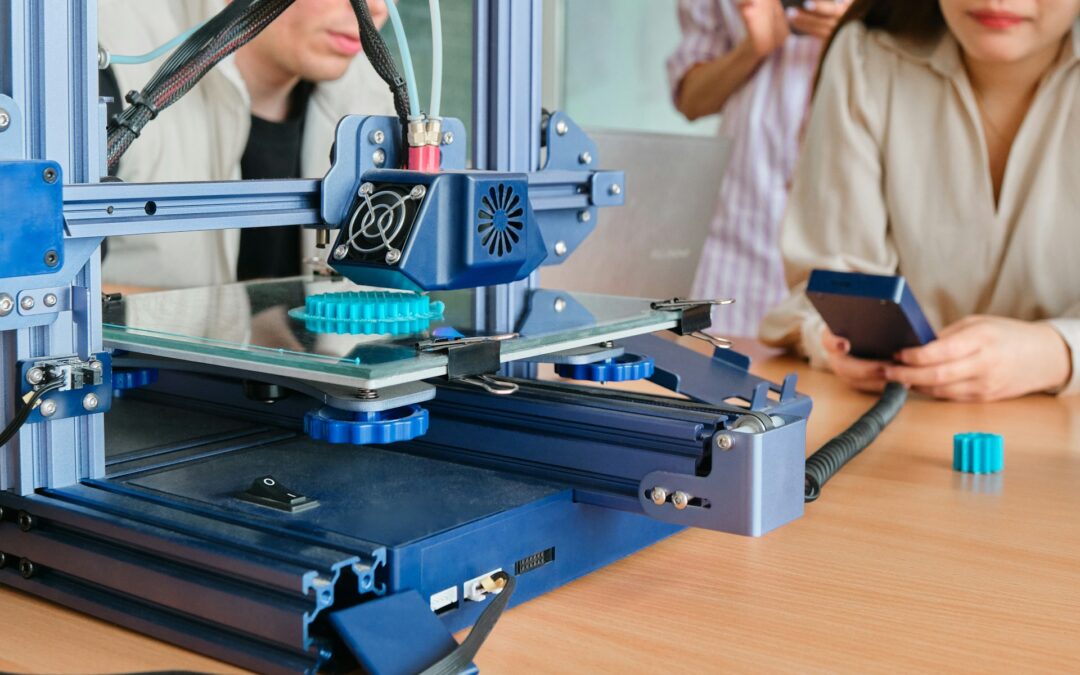
3D printing lets you turn digital designs into physical prototypes quickly, accurately, and affordably—right here in New York City. It’s a fast way to test ideas, refine concepts, and catch potential issues before committing to full production.
Whether you’re creating intricate artistic pieces or precise engineering parts, 3D printing adapts to your project’s needs. With local expertise and advanced technology like FDM and SLA printing, your prototypes are ready faster than traditional methods, without compromising detail or quality.
In a city that never slows down, having a responsive partner nearby ensures your projects stay on track and your ideas keep moving forward. Whether you’re crafting intricate artistic pieces or precise engineering parts, Voxel Magic adapts to your project’s needs. With our local expertise and hands-on support, your prototypes are ready on time, with the detail and quality your work deserves.
Understanding Prototyping with 3D Printing
Prototyping with 3D printing changes how you develop and test products. It speeds up design changes and offers flexibility with materials and shapes.
Knowing what prototyping means, how 3D printing fits in, and how it compares to traditional methods will help you use it effectively.
Definition and Core Concepts
Prototyping is creating a physical model of your idea to test form, fit, and function before full production. 3D printing makes this easier by turning digital designs into real objects quickly.
It supports rapid changes and multiple iterations without long waits or high costs. With 3D printing, you can use different materials like plastics, resins, or even metals.
This lets you evaluate things like strength or flexibility early. The process reduces errors and speeds up decision-making, which is vital in fast-paced environments like NYC.
Historical Context
Traditional prototyping involved molds, machining, or handcrafted models, which were often costly and slow. 3D printing entered the scene in the 1980s but became widely practical for prototyping in the 2000s.
Since then, it has revolutionized product development, especially for startups and designers needing fast results. In NYC, where creativity meets tight deadlines, 3D printing’s growth reflects the city’s fast energy.
Voxel Magic help you cut turnaround times without losing quality. This shift lets you focus more on refining ideas than on waiting for prototypes.
3D Printing vs Traditional Prototyping
Traditional prototyping often requires expensive tooling and long setup times. You might spend weeks or months waiting for parts made by CNC machining or injection molding.
In contrast, 3D printing lets you produce complex shapes directly from CAD files in hours or days. 3D printing offers:
- Speed: Rapid iterations with quick production.
- Cost efficiency: Low setup costs for small batches.
- Design freedom: Create complex geometries not possible with traditional methods.
However, traditional prototyping still excels in producing materials or surface finishes closer to final products. Many teams combine both to balance speed and accuracy.
Knowing when to choose 3D printing over traditional methods depends on your project’s needs and timelines.
Types of 3D Printing Technologies for Prototyping
Choosing the right 3D printing technology impacts your prototype’s accuracy, finish, and production speed. Some methods focus on affordability and ease, while others deliver fine detail and strength.
Understanding these options helps you pick the best fit for your specific needs.
Fused Deposition Modeling (FDM)
FDM works by melting plastic filament and layering it to build your design. It’s widely used for quick, budget-friendly prototypes where form and fit are key.
You’ll find it ideal for testing shapes or assembly alignments. This method handles common materials like PLA and ABS, offering decent strength but lower surface smoothness.
Post-processing like sanding or painting improves the final look. FDM machines vary from desktop models to industrial printers, making it scalable for different project sizes.
Because it’s cost-effective and fast, FDM suits startups and engineers who need to test ideas fast without high detail or specialty materials.
Stereolithography (SLA)
SLA uses a laser to cure liquid resin, creating highly detailed and smooth parts. This technology excels when your prototype demands fine features and a polished finish—perfect for artists or architects who want precise models.
Resin prints offer sharpness that FDM can’t match but require careful handling and curing after printing. SLA works well for small to medium sized parts and can replicate complex geometries.
If your project demands high resolution or intricate detail, SLA gives you that edge with excellent surface quality right out of the printer.
Selective Laser Sintering (SLS)
SLS fuses powdered material with a laser, creating strong, functional prototypes without needing support structures. It’s a solid choice for engineers and manufacturers focused on durability and complex shapes.
This method uses nylon or other polymers, producing parts that handle stress better than FDM or SLA. Because it doesn’t require supports, you get more design freedom and less part waste.
SLS is ideal when your prototype needs to replicate the performance of production parts or when you want to test working prototypes with moving components. It’s a reliable solution for robust prototypes in a fast-paced environment like NYC’s manufacturing scene.
Design Considerations for 3D Printed Prototypes
To get the most from 3D printed prototypes, you need to focus on the right materials, design methods, and proper file setup. These elements affect the quality, cost, and speed of your prototype.
Paying attention to each can help you avoid common issues and deliver precise, functional parts.
Material Selection
Choosing the right material depends on your prototype’s purpose. For strength and durability, nylon or ABS work well.
If you need detail and surface finish, resins offer fine resolution. Metals are best when you require mechanical properties close to the final product.
Keep in mind how materials react during printing. Some warp or shrink, which affects dimensions.
Also consider weight, flexibility, and cost—materials like PLA are affordable but less robust. At Voxel Magic, we help you select materials that fit your timeline and performance needs while balancing budget.
This choice directly impacts how quickly and accurately your prototype can be made.
Design for Additive Manufacturing
Your design must match 3D printing limitations. Avoid overly thin walls or unsupported overhangs, which can cause print failures.
Typical minimum wall thickness ranges from 0.8 to 2 mm, depending on the material and printer. Add features like fillets on corners to reduce stress and improve strength.
Use hollow structures or infill patterns to save material and cut print time without hurting functionality. Design with assembly in mind if your prototype has multiple parts.
Clearances of around 0.2 to 0.5 mm help parts fit together after printing. Understanding these points lets you tweak your CAD files for the best print results without costly trial and error.
File Preparation and Optimization
A clean, optimized file sets your print up for success. Start with a watertight 3D model—no holes or gaps.
Use common file formats like STL or OBJ secured by precise unit settings. Reduce file size by simplifying meshes but keep enough detail to preserve design accuracy.
Check for errors such as non-manifold edges that can confuse printers. Orient your model to minimize supports and improve surface quality, especially for visible areas.
At Voxel Magic, we ensure your file is ready to print fast and accurate, saving you headaches and speeding delivery.
Workflow of Prototyping with 3D Printing
Prototyping with 3D printing involves turning your ideas into physical models quickly and accurately. The process ensures your designs can be tested and refined with speed and precision, helping you move from concept to a near-final product efficiently.
Ideation and Concept Development
Your prototyping starts with clear ideas. Define the problem, goals, and basic shape of the object you want to create.
Sketching or making rough models helps visualize your concept and identify key features. At this stage, consider the function, size, and materials you might need.
Keep in mind how your prototype will be used or tested since this guides design decisions. You want a realistic but flexible plan that allows adjustments later.
In NYC’s fast pace, quickly capturing your ideas means you don’t lose momentum. This early work affects the whole project and sets your path for smooth printing and evaluation.
CAD Modeling
Next, transform your concept into a 3D digital model using CAD (computer-aided design) software. A precise CAD file is crucial because your printer creates layers based on this data.
Focus on clear geometry and correct dimensions. Use the software to fix any design flaws before printing.
This step also lets you optimize the model for the printer type you choose. For example, thinner walls or added supports might be needed.
You can share your CAD files locally for fast reviews or adjustments. Voxel Magic’s team can help ensure your model suits the printer’s capabilities and materials available in New York.
Rapid Iteration
Rapid iteration means quickly printing prototypes, testing them, and making improvements without long delays. Once your first print finishes, examine it for fit, function, and detail.
Use the feedback to update your CAD model and print a new version. This loop repeats until your design meets your exact needs.
Local access to fast, precise 3D printing services helps you keep this cycle moving. Being able to pick up or deliver models on short notice fits the demanding NYC timeline and ensures you don’t miss deadlines.
Applications Across Industries
3D printing plays a key role in speeding up design, improving precision, and cutting costs across several industries. You’ll see rapid prototyping transforming product development, custom solutions in healthcare, and advanced part creation in automotive design.
Product Development
In product development, 3D printing lets you move from idea to physical prototype quickly. You can create detailed models that show exact dimensions and functionality without long waits.
This speed helps you test form and fit early, reducing costly errors later. You also gain the flexibility to tweak designs between print runs.
This means faster iterations and closer collaboration with teams. For NYC startups and creators, having a local 3D printing partner means meeting tight deadlines with precision, so your innovations hit the market faster.
Medical and Healthcare
3D printing in healthcare enables highly personalized medical models and tools. You can produce patient-specific implants, surgical guides, and anatomical models that help surgeons plan complex procedures precisely.
Custom prosthetics and dental devices come to life faster and with better fit than traditional methods. This reduces patient discomfort and recovery time.
Working with a local expert ensures fast turnaround when timing is critical for medical cases.
Automotive Prototyping
Automotive designers use 3D printing to build functional prototypes of parts and components. This allows you to test performance and assembly before committing to expensive tooling.
Lightweight, complex structures that traditional manufacturing can’t easily make become achievable. You save time and money as you finalize designs for aerodynamics, ergonomics, and safety.
In NYC, quick access to reliable prototyping accelerates your product lifecycle.
Benefits of 3D Printing in Prototype Development
Using 3D printing in prototype development gives you clear advantages in cost, speed, and ability to customize. These benefits help you test ideas quickly and make changes without extra hassle or expense.
The technology adapts well to different project needs, making your process both efficient and precise.
Cost Efficiency
3D printing cuts costs primarily by reducing the need for expensive tooling and molds. You only pay for the material used in the print, which saves money on setup and production runs.
Since you can produce complex parts in one step, it lowers assembly costs and reduces waste. This makes prototypes affordable even if you need multiple design versions.
You avoid paying for long vendor lead times or outsourcing, which can add hidden costs. With a local 3D printing partner like Voxel Magic, you keep expenses predictable and on budget.
Faster Turnaround Times
Speed is key in prototype development, and 3D printing delivers this by turning digital designs into physical parts often within days. This rapid turnaround helps you test ideas faster and move through design iterations with less delay.
In-house printing cuts out waiting for external suppliers, which usually take weeks. You get immediate feedback and can refine your product quickly to meet tight NYC project schedules.
This fast pace also helps you stay competitive by accelerating product development timelines. Projects don’t stall, and you make decisions informed by real, tangible models.
Customization Capabilities
3D printing excels at producing highly customized prototypes. You can easily adjust designs on the fly without extra cost or time penalties.
This flexibility lets you create unique shapes, intricate details, or tailored features that traditional methods struggle to achieve. Whether your project is artistic or technical, the technology adapts to your vision.
For NYC creators and innovators, this means you can explore more ideas, refine ergonomics, or test different materials—all with precision and speed. Your prototypes truly reflect your original concept.
Challenges and Limitations
When using 3D printing for prototyping, you’ll face specific hurdles that affect materials, part strength, and precision. These can impact how well your prototype performs and how closely it matches your design.
Material Constraints
Not all materials are compatible with every 3D printing method. For example, some plastics may not offer the durability or flexibility you need, while certain metals require specialized printers.
Your choice is often limited by what the printer can handle and the properties the final part must have. Material options also differ in color, texture, and finish.
Some may need extra post-processing to meet your standards. These constraints can slow down development if you need to test multiple materials to find the best fit.
Durability Concerns
3D printed prototypes often lack the toughness of injection-molded or machined parts. Layer-by-layer building creates weak points where cracks can form under stress.
If your model must endure heavy use or loads, keep durability limits in mind. Some printing methods offer higher strength, but this usually comes at a greater cost or longer lead times.
Reinforcements or design changes may be necessary for parts that must stand up to real-world conditions.
Accuracy and Tolerances
3D printing precision varies by technology and machine calibration. Small parts with fine details might not print as sharp or exact as your CAD model.
This affects how well prototype components fit or function. Typical tolerances range from 0.1 to 0.5 millimeters, which may not work for extremely tight fits or high-precision instruments.
Warping or shrinkage can also distort dimensions. You’ll need to account for these factors in your design or through post-processing adjustments.
Future Trends in 3D Printed Prototyping
The future of 3D printed prototyping is defined by smarter materials, faster automated workflows, and scalable solutions that fit both small startups and larger manufacturers.
These changes will help you test and improve designs quicker, with higher precision and lower cost.
Emerging Materials
New materials are expanding what you can do with 3D printing. Beyond plastics, you’ll see specialized composites, flexible polymers, and bio-compatible resins tailored for different industries.
These materials offer better strength, durability, and custom properties like heat resistance or electrical conductivity. For example, in healthcare, bio-compatible materials allow for printing patient-specific implants.
For industrial design, materials with higher impact resistance help create prototypes that behave like real parts. You’ll notice more options designed to match the final product, reducing the gap between prototype and production.
Automation in Prototyping
Automation is speeding up fabrication and quality control. You’ll find 3D printing integrated with software that manages print schedules, adjusts settings automatically, and monitors print quality in real time.
This reduces turnaround time, saves material, and minimizes errors. Automation also supports batch production for prototypes, helping you test multiple design versions quickly without extra effort.
For NYC creators and engineers, this means quicker iterations and more reliable results.
Scalability Solutions
Scaling up production moves 3D printing beyond prototypes to low-volume manufacturing. Technologies like Multi Jet Fusion (MJF) and Selective Laser Sintering (SLS) help you print larger batches with consistent quality.
You’ll benefit from digital workflows that streamline file preparation and supply chain steps, allowing seamless transition from prototype to production parts. This is essential for startups that want to scale rapidly without switching methods.
Prototyping with 3D printing has transformed how ideas become tangible, letting you iterate quickly, test designs accurately, and bring innovative concepts to life faster than ever. In a city like New York, where speed, precision, and creativity are essential, having a local partner makes all the difference.
At Voxel Magic, we combine advanced 3D printing technologies with hands-on expertise to ensure your prototypes meet your vision and deadlines. From intricate artistic models to precise engineering parts, we help you streamline development, save costs, and turn ideas into reality without unnecessary delays.
Whether you’re an artist, designer, engineer, or startup, Voxel Magic is your NYC-based partner for rapid, reliable, and high-quality prototyping—keeping your projects moving and your innovation on track.
Frequently Asked Questions
Prototyping with 3D printing offers precise control over design, quick turnaround times, and multiple material choices. You can fine-tune your models using specialized software, manage costs based on complexity, and select services that match your project needs.
What software is essential for 3D printing prototypes?
You’ll need CAD (Computer-Aided Design) software to create detailed digital models. Popular options include Fusion 360, SolidWorks, and TinkerCAD for simpler projects.
These tools help you design, modify, and prepare files for 3D printing with precision.
What are some examples of successful prototypes made using 3D printing?
Many startups have used 3D printing for parts in medical devices, custom tools, and product concepts. Architects rely on detailed scale models to visualize buildings.
Artists create complex sculptures that would be impossible through traditional methods.
What are the costs associated with 3D printing for prototype development?
Costs vary based on size, material, and complexity. Small, simple prototypes can be budget-friendly, while large or highly detailed prints cost more.
You’ll also pay for finishing work and any design adjustments. Local services like Voxel Magic offer transparent pricing and fast quotes.
What materials are recommended for prototyping with 3D printing?
Common materials include PLA and ABS plastics for standard prototypes. For stronger parts, materials like nylon or resin offer higher durability and detail.
Your choice depends on the prototype’s function, whether it needs flexibility, rigidity, or fine surface finish.
How does 3D printing facilitate rapid prototyping?
3D printing removes the need for traditional molds or tooling. You can go from digital design to a physical model in hours or days.
This speed lets you test, refine, and iterate designs quickly, cutting development time and cost.
What should be considered when choosing a 3D printing service for prototyping?
Look for a partner with local presence to ensure fast turnaround and easy communication.
Check their range of printing technologies and materials.
Choose a service that offers expert advice and quality control to handle your project’s specific needs.
