
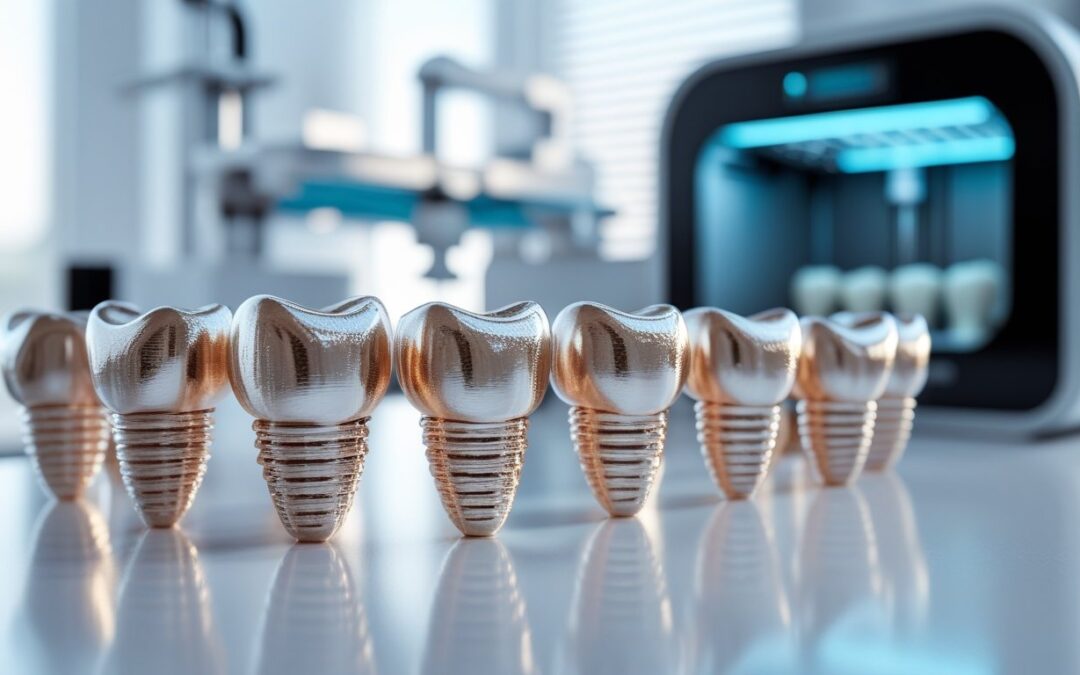
3D printed dental implants are transforming modern dentistry by making tooth replacement more precise, personalized, and affordable. Unlike traditional implants, which rely on lengthy manufacturing processes, 3D printing creates implants tailored exactly to each patient’s anatomy.
By integrating advanced imaging, CAD modeling, and additive manufacturing, dental professionals can deliver highly accurate solutions faster and with less waste. Patients benefit from implants that not only fit better but also look and feel more natural.
Voxel Magic specializes in using cutting-edge 3D printing methods to produce dental implants and surgical guides with unmatched precision.
This article explores how 3D printed dental implants work, their benefits, challenges, and future trends.
Understanding 3D Printed Dental Implants
3D printed dental implants use advanced technology to create custom tooth replacements layer by layer. They differ from traditional implants by offering precise fits and better integration with your jawbone.
Materials, types, and digital design play key roles in how well these implants work for you.
Definition and Overview
3D printed dental implants are tooth replacements made using additive manufacturing. Instead of being carved or cast from a block of material, they are built up layer by layer from a digital model.
This process allows highly detailed, patient-specific designs that fit your mouth exactly. The digital workflow often includes 3D scanning or CT imaging, computer-aided design (CAD), and rapid prototyping.
This means your implant matches your jaw structure perfectly and supports better healing after surgery. The precision also reduces the need for adjustments during placement.
Comparison With Traditional Implants
Traditional implants are usually mass-produced in standard sizes and shapes. They often require manual crafting or shaping to fit the patient’s mouth.
This can lead to longer waiting times and less exact fits. 3D printed implants provide faster turnaround because they are designed and printed digitally.
This boosts accuracy and customization, making the implant fit better with your jawbone and surrounding teeth. The process also allows complex structures that support stronger bonding between bone and implant.
Key Materials Used in 3D Printing
The main material for 3D printed dental implants is titanium. It’s strong, lightweight, and biocompatible, meaning your body accepts it without issues.
Titanium’s surface can be printed with detailed textures that help bone cells attach firmly to the implant. Other materials include ceramic and polymer composites.
These are sometimes used for parts like abutments or crowns rather than the implant itself. Ceramics offer a natural tooth-like appearance, while polymers are used for temporary or prototype models.
Types of 3D Printed Dental Implants
You can find several types of 3D printed implants depending on your needs:
- Single tooth implants: Replace one missing tooth with a digitally designed implant and crown.
- Bridges: Support multiple teeth by joining two or more implants with a single prosthetic piece.
- Full dentures: Custom-fitted implant-supported dentures that offer more stability than traditional removable dentures.
Each type benefits from the fast, precise manufacturing process, ensuring the best fit and function for your unique dental structure.
3D Printing Technologies in Implant Dentistry
3D printing in implant dentistry relies on precise methods that shape implants and surgical guides to fit individual needs. The technologies focus on accuracy, material strength, and customization.
Each method offers a unique approach to building parts layer by layer, enabling detailed and patient-specific results.
Stereolithography (SLA)
Stereolithography uses a light source to cure liquid resin into solid shapes. This process builds dental implants or guides by hardening thin layers of resin with a laser or UV light.
SLA provides high precision and smooth surface finishes, making it ideal for detailed surgical guides. You can expect fine detail and tight tolerances from SLA, which helps ensure an accurate fit in the mouth.
However, the materials used are typically resins that may not have the strength or durability needed for certain implants directly, so SLA often produces guides or models rather than final implant parts.
Direct Metal Laser Sintering (DMLS)
DMLS is a metal 3D printing method that uses a laser to fuse fine metal powder layer by layer. It can produce implants made from titanium or titanium alloys, materials trusted for their strength and biocompatibility.
With DMLS, you get implants tailored exactly to a patient’s bone structure and anatomy. The technology allows for complex shapes and internal porosity, which improves bone integration and implant stability.
This method supports fast production without compromising on material properties or precision.
Fused Deposition Modeling (FDM)
FDM melts and extrudes plastic filament to build parts in layers. Though less common for final implants, it plays a role in creating prototypes, surgical guides, and fit-check models.
You benefit from FDM’s affordability and quick turnaround when you need a physical model for planning or testing before moving to metal printing. While FDM parts lack the fine detail and strength of metal prints, their speed and cost-effectiveness make them useful in early design stages.
Benefits of 3D Printed Dental Implants
3D printed dental implants bring specific advantages that improve both the process and the outcome of dental restoration. They offer precise fitting, quicker production times, and increased comfort during recovery.
These benefits can make a big difference in your treatment experience and results.
Customization and Precision
With 3D printing, each dental implant is made digitally based on your exact anatomy. This means the implant fits your jaw and bite precisely, unlike traditional implants that often rely on standard sizes.
The process uses advanced imaging, like CT scans and CAD software, to design your implant layer by layer. This precision reduces the chance of errors during surgery and improves the implant’s stability long term.
Because the implant matches your unique bone and tooth structure, it supports better function and natural appearance. You get a custom solution tailored just for you, not a one-size-fits-all option.
Time and Cost Efficiency
3D printing cuts down the steps needed to produce dental implants, speeding up turnaround times. Instead of waiting weeks for a lab to manually craft your implant, the manufacturing happens quickly through automated printing.
This efficiency often lowers costs compared to traditional methods, especially by reducing labor and material waste. You benefit from faster treatment without sacrificing quality.
Local 3D printing partner in NYC can provide faster service and quicker delivery, speeding up your whole restoration timeline.
Enhanced Patient Comfort
The precise fit of 3D printed implants means less invasive surgery. Because the implant matches your anatomy perfectly, doctors can place it with minimal adjustments, which generally leads to less pain and swelling.
Recovery times improve as well. You face fewer complications and quicker healing due to the implant’s accurate design and fit.
Patients tend to feel more comfortable knowing their implant is customized, which can reduce anxiety about the procedure and its outcome. This new technology supports a smoother, less stressful dental experience.
Clinical Workflow and Process
Crafting a 3D printed dental implant involves precise steps focused on capturing accurate anatomy, designing the implant digitally, and carefully manufacturing the final piece. Each stage builds on the last to ensure a custom fit and reliable function.
Digital Imaging and Scanning
Your process starts with detailed digital imaging to capture the patient’s oral anatomy. Technologies like cone-beam computed tomography (CBCT) and intraoral scanners create accurate 3D models of the jaw and surrounding tissues.
This imaging provides the exact measurements needed for implant planning. You avoid guesswork by working from a precise digital map of bone density and tooth position. The models also aid communication with dental labs and surgeons, ensuring everyone is aligned on the implant’s fit and placement.
At this stage, clarity and accuracy are vital. Poor scans can lead to ill-fitting implants or surgical complications, so investing in reliable scanning technology saves time and reduces risk down the line.
Implant Design Software
Once you have the digital data, you move to computer-aided design (CAD) software tailored for dental implant creation. This software lets you customize the implant shape, size, and surface features to match the patient’s anatomy.
You can simulate how the implant will interact with bone and soft tissue, adjusting angles and dimensions to improve stability and comfort. Software workflows often include tools to design surgical guides, helping surgeons place implants precisely during procedures.
Some platforms streamline the process with automated steps, speeding up design without sacrificing quality. Designing implants digitally means you can make quick iterations and spot potential issues before manufacturing begins.
Manufacturing and Post-Processing
With the design finalized, the implant is printed using 3D metal printing technologies such as Direct Metal Laser Sintering (DMLS). This method fuses titanium powder layer by layer, producing implants with the strength and biocompatibility required for dental use.
After printing, the implant undergoes finishing steps like heat treatment, surface polishing, and quality inspection. These processes enhance durability and ensure the surface supports bone integration.
Your choice of manufacturing parameters and post-processing directly affects implant performance, so working with a skilled 3D printing partner is key. A local provider allows faster turnaround, enabling you to meet tight clinical schedules without compromising detail or precision.
Patient Outcomes and Performance
When you choose 3D printed dental implants, you benefit from a precise fit, successful integration with your bone, and strong durability. These implants aim to improve how your teeth look, feel, and last over time.
Long-Term Success Rates of 3D Printed Dental Implants
According to a study published in the Journal of Clinical Medicine, 3D printed dental implants demonstrate success rates comparable to traditional implants when proper protocols are followed.
Researchers noted that titanium implants manufactured through additive techniques showed survival rates above 94% after three years, emphasizing both durability and clinical reliability.
Aesthetics and Fit
3D printing lets dental labs create implants that match your mouth’s exact shape. This precision ensures better-fitting implants that look natural and blend with your other teeth.
The technology uses detailed scans to design implants that fit snugly and avoid gaps or discomfort. This fit reduces irritation and helps with chewing and speaking.
Because implants are customized, you get a more natural appearance. Colors and textures can also be adjusted in the design, making your smile look both attractive and authentic.
Osseointegration
Osseointegration is when your implant bonds securely with the jawbone. 3D printed implants often use materials like titanium, which support strong integration.
Thanks to precise design, these implants match your bone’s surface closely, encouraging faster and tighter attachment. A good osseointegration lowers the risk of implants loosening or failing. It also improves your implant’s stability, so you can chew more confidently.
Longevity and Durability
3D printed implants are built to last. The materials used—such as titanium alloys—offer high strength and resistance to wear. Precise manufacturing reduces weak points that can cause fractures or damage. This means your implant stands up better to daily use over many years.
Properly designed implants also distribute chewing forces evenly, which helps protect your jawbone from stress. With good care, 3D printed implants can provide a durable, long-term solution for tooth replacement tailored to your needs.
Challenges and Limitations
While 3D printed dental implants offer custom precision and faster production, there are important hurdles you should know. These span from the materials used, legal rules around medical devices, to the resistance some professionals have to adopting this new technology.
Material Biocompatibility
Materials for dental implants must be safe and non-toxic inside your body. Not all 3D printing materials meet strict biocompatibility standards. Some resins and metals can cause allergic reactions or inflammation if impurities remain after printing.
You need materials that withstand saliva, pressure, and wear without breaking down. Titanium and some dental-grade resins work well but can be costly or require extra processing steps. Post-print treatments like cleaning and curing are critical.
Without these, implants might not bond properly to bone or gum tissue, risking implant failure. Always verify your material’s certification for medical use to avoid safety risks.
Regulatory Considerations
You must follow strict FDA rules or similar agencies governing dental implants in your area. These rules cover material safety, manufacturing processes, and clinical testing.
3D printing adds complexity because every implant may be unique. Regulators require documented quality control for each print to ensure consistency and safety.
This means maintaining detailed records and validating machines regularly. Any changes to design or materials could trigger new approval steps before your implant can reach patients.
Understanding and meeting these regulations is key to avoiding delays or legal issues when you produce 3D printed dental implants.
Technology Adoption Barriers
You might face resistance when introducing 3D printed implants into established dental practices. Some professionals doubt the long-term durability or accuracy compared to traditional methods.
High initial costs for 3D printers and training can slow adoption. Also, integrating 3D design software with existing workflows requires time and expertise. Some dental labs lack local partners who provide fast, tailored 3D printing support.
Without a reliable local vendor, turnaround times increase, limiting your ability to serve patients quickly. Partnering with a skilled local 3D printing service can ease these challenges, offering fast delivery and expert guidance to help you transition smoothly.
Future Prospects of 3D Printed Dental Implants
3D printed dental implants are evolving rapidly with advances in materials, automated design processes, and expanding uses in dental care. These improvements aim to make implants more precise, affordable, and accessible while reducing treatment time.
Innovations in Materials
New materials are improving implant strength, biocompatibility, and aesthetics. Titanium remains a trusted choice, but ceramic implants are gaining ground because they resist corrosion and mimic natural tooth color.
You’ll also see advanced composites and resin blends designed for better integration with bone. These materials reduce inflammation risks and enhance healing.
Research into antibacterial coatings is growing, helping implants fight infection after placement. This reduces complications and improves long-term success rates.
Automation and AI Integration
Automation streamlines implant design, speeding up the production process while boosting accuracy. With AI-powered software, you can expect more precise fitting by analyzing patient scans quickly and creating customized implant models.
AI helps predict potential complications by analyzing bone density and jaw structure. This leads to better treatment plans tailored to your unique needs.
Expanding Clinical Applications
3D printing is expanding beyond simple tooth replacement. It now supports surgical guides for implant placement, improving accuracy in the operating room.
Dental bridges and crowns made with 3D technology offer a better fit and comfort. Implant-supported prostheses are becoming more common, with customization that enhances function and appearance.
Selecting the Right Dental Professional
Choosing the right dental professional is key when considering 3D printed dental implants. You want someone who understands the specific technology and can deliver precise, customized results.
Look for experience with digital workflows like CAD design and 3D printing. These skills ensure your implants fit perfectly and function well.
Clinics that invest in advanced equipment often provide faster, more accurate treatments. Check for credentials and reviews.
A professional with good patient feedback and updated training in 3D printing methods is more likely to offer high-quality care. Ask if they handle the full process—from scanning to printing—or partner with trusted local experts.
Here’s a quick checklist to guide your choice:
| What to look for | Why it matters |
| Expertise in 3D printing | Ensures precise, custom implant fit |
| Use of CAD and CT scanning | Improves design accuracy |
| Local partnerships or labs | Speeds turnaround and support |
| Clear patient communication | Builds trust and sets proper expectations |
| Transparent pricing | Helps you plan without surprises |
The Future of Dentistry with 3D Printing
3D printed dental implants are redefining how patients and professionals approach tooth replacement. With their ability to deliver personalized, precise, and durable solutions, they offer significant improvements over traditional methods.
From faster production and better comfort to long-term durability, the technology makes advanced dental care more accessible and reliable.
As the field evolves, innovations in materials, automation, and clinical applications will only strengthen the role of 3D printing in dentistry. Patients can look forward to more efficient treatments, while professionals gain tools that enhance accuracy and outcomes.
Ready to explore how custom 3D printed dental implants can improve your dental practice? Reach out to Voxel Magic and take the first step toward precision-driven care.
Frequently Asked Questions
What materials are used in the production of 3D printed dental prosthetics?
Biocompatible resins and titanium alloys are most commonly used in 3D printed dental prosthetics. These materials are safe, durable, and designed for use inside the mouth.
What is the average cost of dental implants made with 3D printing technology?
The cost usually ranges from $3,000 to $5,000 per implant, depending on the complexity of the design, the materials used, and the dental provider.
How durable are 3D printed dental restorations compared to traditional methods?
3D printed restorations are generally just as durable as traditional ones. Titanium implants and advanced dental resins provide excellent strength and longevity.
What are the advantages of choosing 3D printed dentures over conventional dentures?
3D printed dentures are more precise, faster to produce, and often more comfortable than conventional dentures. They typically require fewer adjustments.
What is the expected lifespan of 3D printed dental implants?
With proper care, 3D printed implants can last 10 to 15 years or longer. Titanium components often last the longest.
Are there any specific care instructions for maintaining 3D printed dental prosthetics?
Care for them as you would traditional prosthetics—regular brushing, flossing, and routine dental check-ups are essential. Avoid excessively hard foods to prevent damage.
